

Variation West
Ardyth Kennelly ·
Variation West is a sweeping novel that covers not only a century of Western life and history, but also the vast territory of the human heart. It's an immense literary collage, with dozens of engaging characters and a wealth of both comic and tragic stories to tell. We see not only the humor and heartaches of domestic life under Mormon polygamy, but also the sacrifices—including death and disfigurement—that women make in trying to fulfill society's expectations of female beauty; the unspeakable violence that men do; and how patterns laid down in the distant past resurface again and again.
As with her previous books, Kennelly drew upon her childhood memories of Salt Lake City and the stories she heard from her relatives about life in Utah of the nineteenth century. But Variation West takes us much farther, through the 1930s (when Kennelly herself came of age) and into the new era of the 1960s.
Purchase VARIATION WEST for $17.00
Click the brown button below to purchase the book for $17.00 (ships to U.S. addresses only). You can also purchase it for $29.95 through your local bookstore or online retailers such as Barnes & Noble and Amazon. You can also ask your local library to purchase the book.
Paperback:$29.95ISBN: 978-0-9904320-0-5
E-book:$1.99ISBN: 978-0-9904320-1-2
A summary of the book:
Thirteen-year-old Hindle Lee, her mother dead and her father on the run after leading the Mormons' 1857 massacre of a wagon train at Mountain Meadows, goes to work in a convalescent home and eventually takes on a career as an "eclectic physician of women's ailments." Her sister Lucitie travels to England and back and becomes part of a four-generation hairdressing dynasty. Through the comic, strange, and tragic stories of Hindle's patients, and through the authentic speech, sense of place, and experience of historical events that Kennelly re-creates for us, Salt Lake City of the nineteenth century comes alive. Drawing upon her sharp memory and meticulous research, the author takes us from ordinary households to rich mansions, from wagons to motorcars, from brightly lit Main Street to the dark inner expanses of the old Constitution Building.
The stories of that wondrous past, made mythic through the mind of a little Australian girl, are handed down to Hindle's granddaughter Rosetta, who comes of age in the changing times of the 1920s. With a spirit hungry for knowledge, Rosetta becomes a keen observer of the workings of the world and the human psyche. She and her cousin Lavonne, working as beauty operators and never separated for long, must deal all their lives with the hard truths about men, women, and beauty, and with different kinds of fanaticism and violence. All these elements are drawn together in a final reverberating event that only an artist could make meaningful.
Who's in this book?
- a proud young woman who educates herself and daringly seizes a career
- her big sister, who fights for her man and keeps him safe
- a doctor with a grand manner but slightly slippery morals
- a Paiute man puzzled by the changes in his world but always doing what he must
- the Mormon leader Brigham Young, seen from afar and not so nicely as his followers would have it
- a millionaire much admired but used to getting his way with women and everything else
- a bitterly disillusioned madam and her "boarders"
- a religious convert so fervent that he commits an unbelievable act of mutilation
- a woman who loves and loves and loves and is finally rewarded
- an impulsive polygamist who takes one wife after another
- a gay English hairdresser with roots in the French Revolution
- a frivolous actress whose naive self-confidence leads to tragedy
- an unearthly albino child connected with many terrible events
- a little Australian girl who earnestly gathers and saves another family's history
- film stars Mary Pickford and Douglas Fairbanks, in cameo appearances
- a millionairess and her daughter, both desperately (and comically) convinced that they're actually poor
- a woman with an insatiable hunger to know and understand the world
- her gorgeous cousin, enslaved by the cruel chains of Beauty and her own need to be admired
- another cousin who finds his passion in telling an ancestor's bloody story
- a warrior who sacrifices his eyes for his beliefs
- a dangerously deranged young Mormon Fundamentalist just back from Vietnam
- a Catholic priest with a secret desire
- a gay composer from New York who outrages strait-laced Salt Lake City in the most hilarious way
- and many lesser characters, all of them delightfully true to life.
What's in this book?
- a city so beloved that the author takes us, by enchantment, to its streets and places
- a building so beloved it's almost a character itself
- historical events that are always present, always happening: "Once upon a time there was no time and it was then that…"
- a story of an old massacre that's almost told three times in art but never does get told
- a story of another massacre: women's bodies and lives sacrificed to Beauty
- comedy, tragedy, and quotidian life, from the 1860s to the 1960s, all mixed together in a sumptuous book that's like a grand collage, a grand procession, a pageant, a stage play, an epic movie.
How can you tell the difference between fiction and real life? Kennelly explains the difference near the end of the book:
“The trouble with fiction, it's too reasonable. Real life isn't reasonable at all.”
VARIATION WEST is real life—transmuted into fiction.
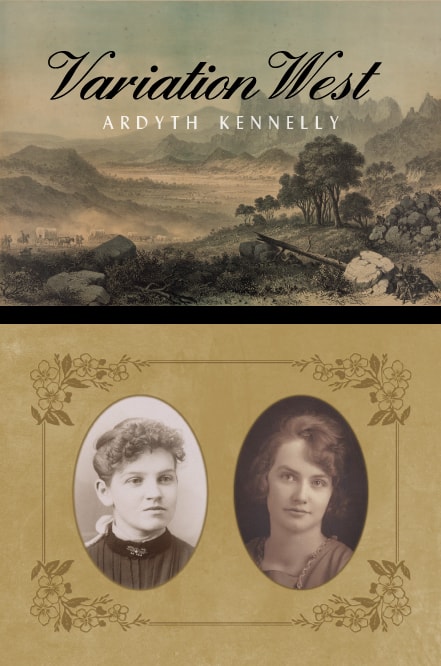
ON THE COVER: The two women represent the fact that the book has two major female characters from different eras. The top image is an 1877 rendering by S. H. Redmond of the arrival of the ill-fated Fancher-Baker wagon train at Mountain Meadows, Utah, in September 1857.
Bodies Adjacent: Ardyth's Memoir & Egon's Journal
Ardyth Kennelly and Egon V. Ullman ·
Part memoir, part confession, part journal, Bodies Adjacent is the story of two lives told by each one about the other. The novelist Ardyth Kennelly and her physician husband, the Jewish Viennese émigré Egon V. Ullman, met in the heart of Oregon's Willamette Valley in the 1930s and soon began an unlikely love affair, continuing it for nearly three decades in Portland—throughout the disruptions of the Depression, the war, and finally sudden fame, as well as their own personal demons.
Writing thirty years after Egon's untimely death in 1962, Ardyth looks back with a deeper understanding of their lives than she had possessed during her self-conscious younger years. She tells us something of her early life and of Egon's history; laments her ignorance of the love he must have felt for his home country; shares her impressions of the Jewish refugees and émigrés he knew in Portland; remembers his loving and indulgent care for her; confesses her sorrow and regret for how she treated him in his illness and death; and spins some fanciful stories to illustrate how their life together began and ended.
In the middle of her memoir, Ardyth places the journal that Egon kept—at her suggestion—during the years when she was writing her first five novels (1947–56). His fascination with her talent, intellect, and charm never wavered through all their personal troubles. Their shared love of books and the desire to write brought them together and remained a major focus of their life in marriage.
Bodies Adjacent is a captivating and singular love story—painfully honest, yet utterly enchanting and sweet.
Purchase BODIES ADJACENT for $12.00
Please click the brown button below to purchase the book for $12.00 (ships to U.S. addresses only). You can also purchase the book for $17.95 through your local bookstore or online retailers such as Barnes & Noble and Amazon. You can also ask your local library to purchase a copy.
Paperback:$17.95ISBN: 978-0-9904320-2-9
E-book:$1.99ISBN: 978-0-9904320-3-6
New York on $5 a Day: A Novelist's Memoir, 1963–64
Ardyth Kennelly ·
In 1963, the novelist Ardyth Kennelly left the backwater of Portland, Oregon, and headed to the Big Apple, hoping to revive her writing career and become "a woman of the world." With her trusty guidebook New York on $5 a Day, she found famous places to go and cheap places to eat—as well as wonderful surprises and in-the-flesh celebrities at every turn.
Like many of Kennelly's novels, her memoir is a colorful collage of stories. She tells of her encounters with everyday New Yorkers, but also delves into little tales from the past: three tragic deaths in France, a "cricket team" in Mormon Utah, and the last harem girl left in Constantinople.
Among the unusual people Kennelly befriended during her sojourn in New York were the English witch Sybil Leek, the forgotten writer Anzia Yezierska, and the poet Sanders Russell. She had an apartment in the Village, a tall and handsome Austrian beau, a "Beatle haircut" editor, and little idea who was running for president (she didn't have a TV). She returned to Portland in late 1964.
Available from online retailers such as Amazon or Barnes & Noble, or order through your local bookstore. You can also ask your local library to purchase a copy.
Paperback:$12.00ISBN: 978-0-9904320-4-3
E-book:$1.99ISBN: 978-0-9904320-5-0
Millionaire Housekeeping
Ardyth Kennelly ·
In this mid-career novel, written probably around 1970, Ardyth Kennelly breaks the mold of her earlier and later, mostly Western-themed books. Millionaire Housekeeping is part social satire, skewering the self-absorbed habits and preoccupations of the very rich, and part illustration of how the old ideas about propriety were swept away in the 1960s, when scenes of violence filled movie and television screens and viewers needed ever more sordid spectacles to get their kicks.
Under the guise of writing a handbook for the "elegant conduct" of a "millionaire philanthropist's" household, Mary—nicknamed Minette by the mistress's French maid—recounts her rise in one such New York establishment, from a fourteen-year-old dining hall maid in the 1930s to the superintending housekeeper by the 1960s. She's no Mrs. Hughes of "Downton Abbey," but fans of that show will see much that is familiar here: Kennelly borrows extensively from the (real) 1903 handbook Millionaire Households and Their Domestic Economy.
Young Mary and the other "under servants" almost never see "the family," so they can only speculate about what's really going on with them. What is the mysterious attraction of the ordinary-looking Miss Geraldine, who steals one husband after another—in the same family? How did the butler develop such an unseemly "tan"? Why would Miss Sylvaine starve herself and then gorge, and how fat was Miss Pinella, anyway?
Over the years, Mary has to give up her dream of a "Shangri-La" with the handsome but shallow footman Jack—that is, working in a millionaire household where Monsieur and Madame never come home. Instead, together with the chauffeur and "useful man" Jim, she cultivates a love of learning, as the two educate themselves by reading voraciously through the master's library.
Still, she has trouble understanding the turbulent new world of the countercultural 1960s. She can't make head nor tail of her foster son Leland's successful "art film," nor of his involvement in the sensational and appalling movie project of the scion of the millionaire family—one that pushes the idea of art to a dangerous extreme and carelessly preys on desperate people.
Millionaire Housekeeping also reminds us of a phenomenon of our own time: the unconscionable chasm between those with outlandish wealth and those just struggling to get by.
Purchase MILLIONAIRE HOUSEKEEPING for $9.95
Click the brown button below to purchase the book for $9.95 (ships to U.S. addresses only). You can also purchase it for $12.95 from online retailers such as Barnes & Noble or Amazon, or order through your local bookstore. You can also ask your local library to purchase a copy.
Paperback:$12.95ISBN: 978-0-9904320-6-7
E-book:$1.99ISBN: 978-0-9904320-7-4
Earlier published novels
Ardyth Kennelly had five novels published between 1949 and 1956. Four of these were based largely on stories she heard from her mother about life and polygamy in Utah during the late nineteenth and early twentieth centuries. Her other book from that time, The Spur, dealt with the final days of John Wilkes Booth.
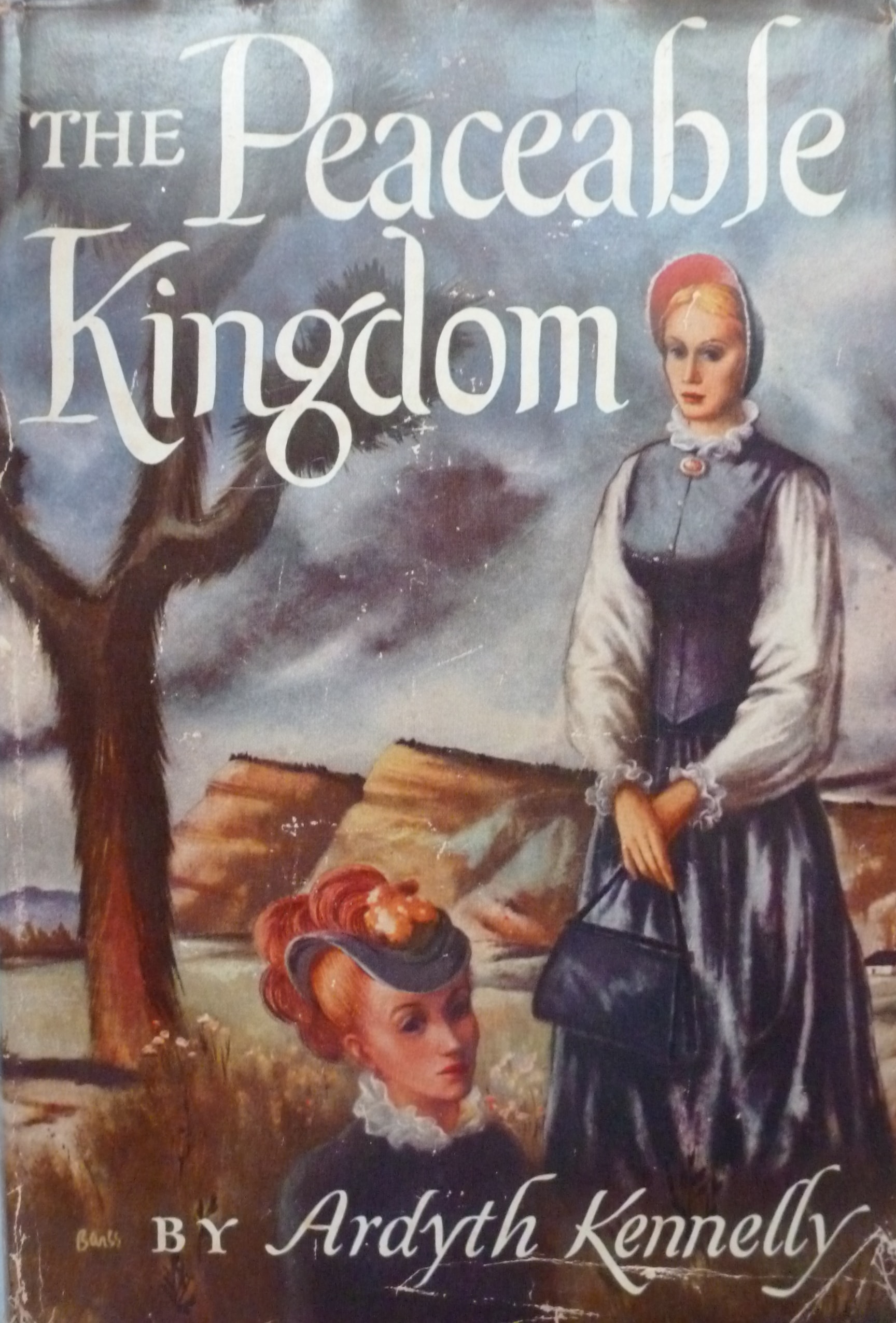
The Peaceable Kingdom
Houghton Mifflin, 1949 · Literary Guild selection for December
The story of Linnea Ecklund, based on the life of Kennelly's maternal grandmother, Anna Matilda (Johnson) Olsen, the second wife in polygamy of Emil Oscar Olsen. This most popular of Kennelly's books was reissued by Houghton Mifflin in 1981 in a combined edition with Good Morning, Young Lady. (The University of Oregon Press planned a new edition of The Peaceable Kingdom in 2003, but it was never actually published.)
Ardyth's maternal grandparents, mother, aunts, and uncle served as models for the fictional family of her first book, according to her letters and other sources. Her cousin William Scott Fisher noted in his 1989 book The History of Our Olsen Family Ancestors, "Ardyth generously shared with me many of the stories she had learned from her mother about life in the polygamous Olsen family just before and after the turn of the century. And while the records proved some of the stories [in The Peaceable Kingdom] to be more fable than fact, most developed into fascinating true accounts, with more detail than had previously been known."
In her letters, Ardyth mentioned holding "story conferences" with her mother, Lulu "Lula" Olsen Kennelly, and wrote to her (probably sometime in early 1948): "I'm going to end this particular volume with your twelfth year and not go through to your marriage as I had planned at first. The next volume picks up where this one leaves off and goes through to my birth. Then there will be 2 more. Four volumes in all to the saga." As it turned out, Ardyth wrote only three books based on her mother's life, none of them including her own birth.
In letters written in the 1950s to one of her readers, Mary Brown, Ardyth confirms that Gertrude (Linnea's second-oldest child in The Peaceable Kingdom) "was—and is—my mother" and that "Linnea lived until 1934"—referring to Kennelly's grandmother, Anna Olsen. Ardyth also wrote in 1963 of "Linnea's kids": "Bertha is 83, Gertrude 81, Stellie 79," while Rudie was 77. These ages correspond to Ardyth's mother, Lula, and the three of Lula's siblings who were closest in age to her.
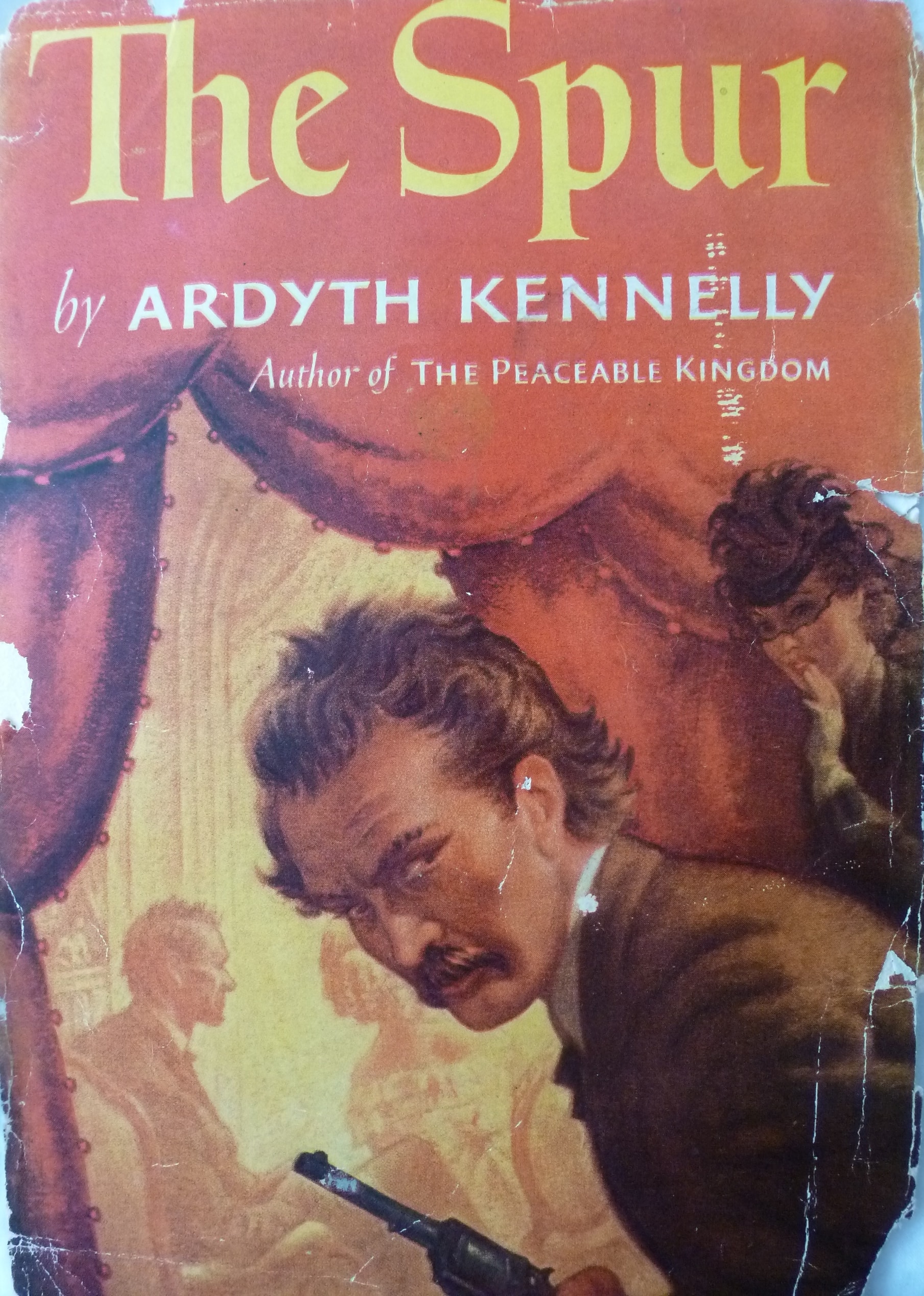
The Spur
Julian Messner, 1951
A fictionalized but scrupulously researched and historically accurate account of the last days of John Wilkes Booth, Abraham Lincoln's assassin. A television adaptation of the book was aired on NBC's Philco Television Playhouse on September 23, 1951; and Kennelly's moving account of Lincoln's death was included in the 1953 anthology Abe Lincoln, edited by Hilah Paulmier.
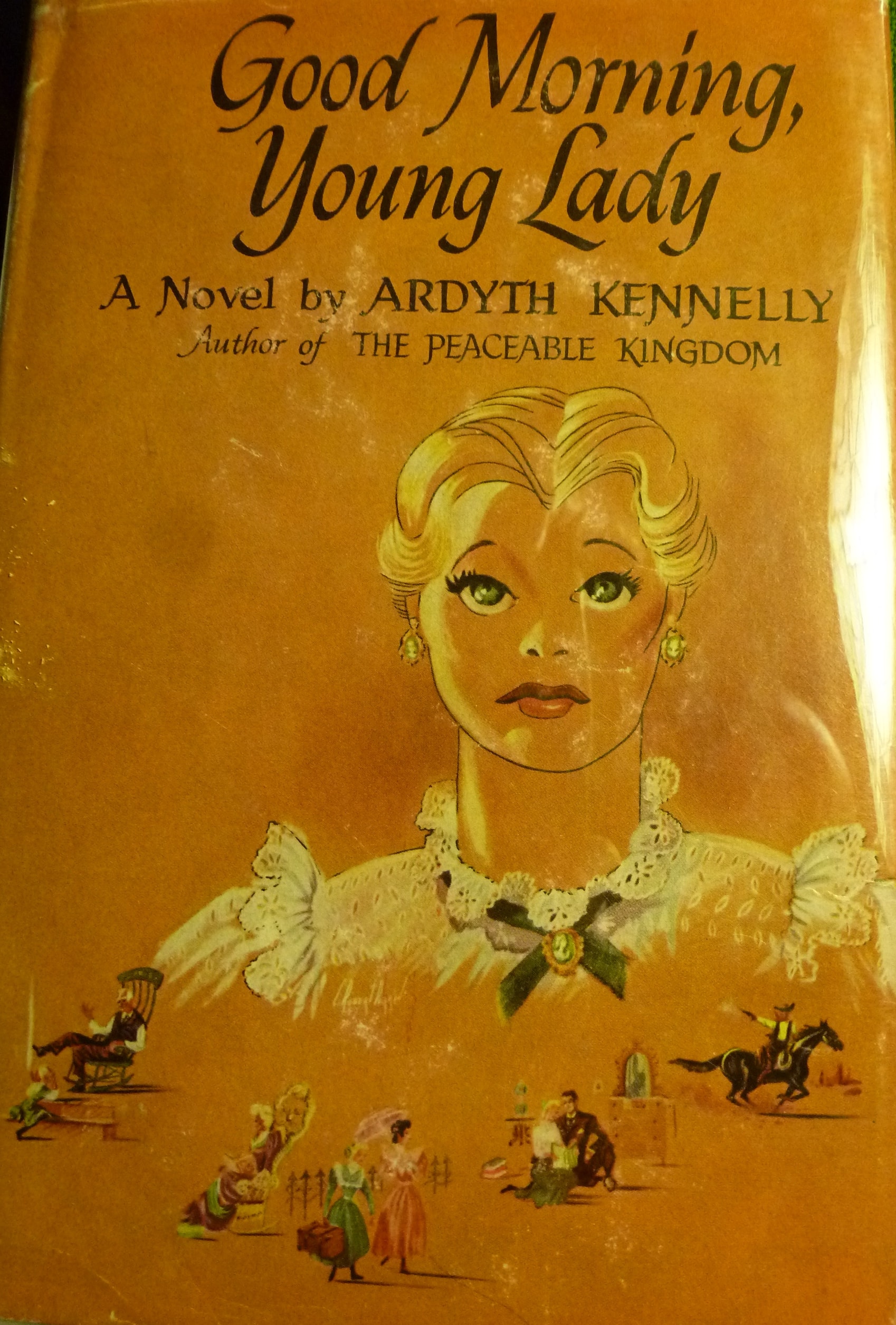
Good Morning, Young Lady
Houghton Mifflin, 1953 · Literary Guild selection for May
The story of Dorney Leaf, who grows up in Salt Lake City under difficult circumstances, longing to meet the outlaw Butch Cassidy but finding also a love of learning.
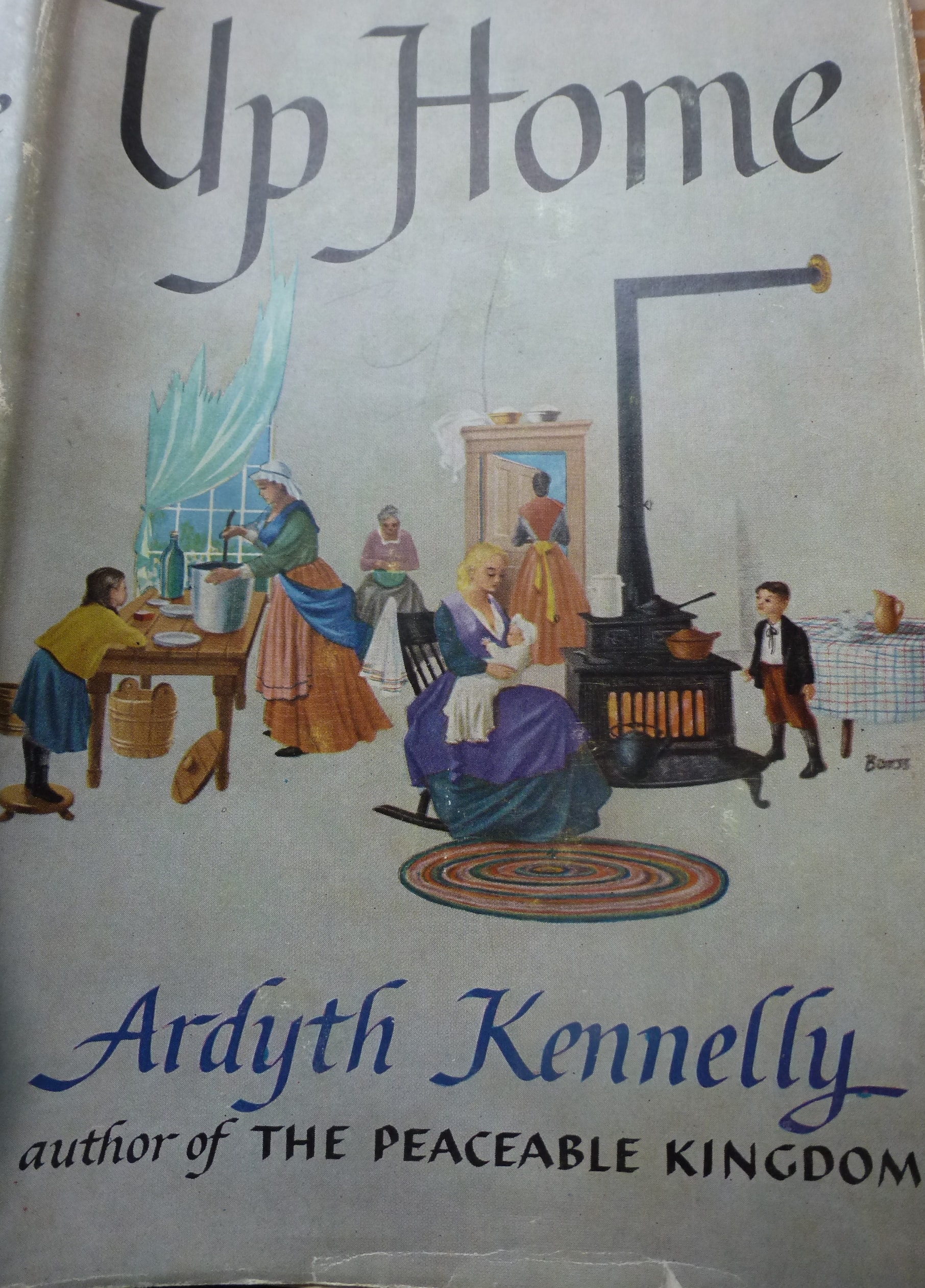
Up Home
Houghton Mifflin, 1955
The life of Linnea Ecklund is continued, with many new characters and stories.
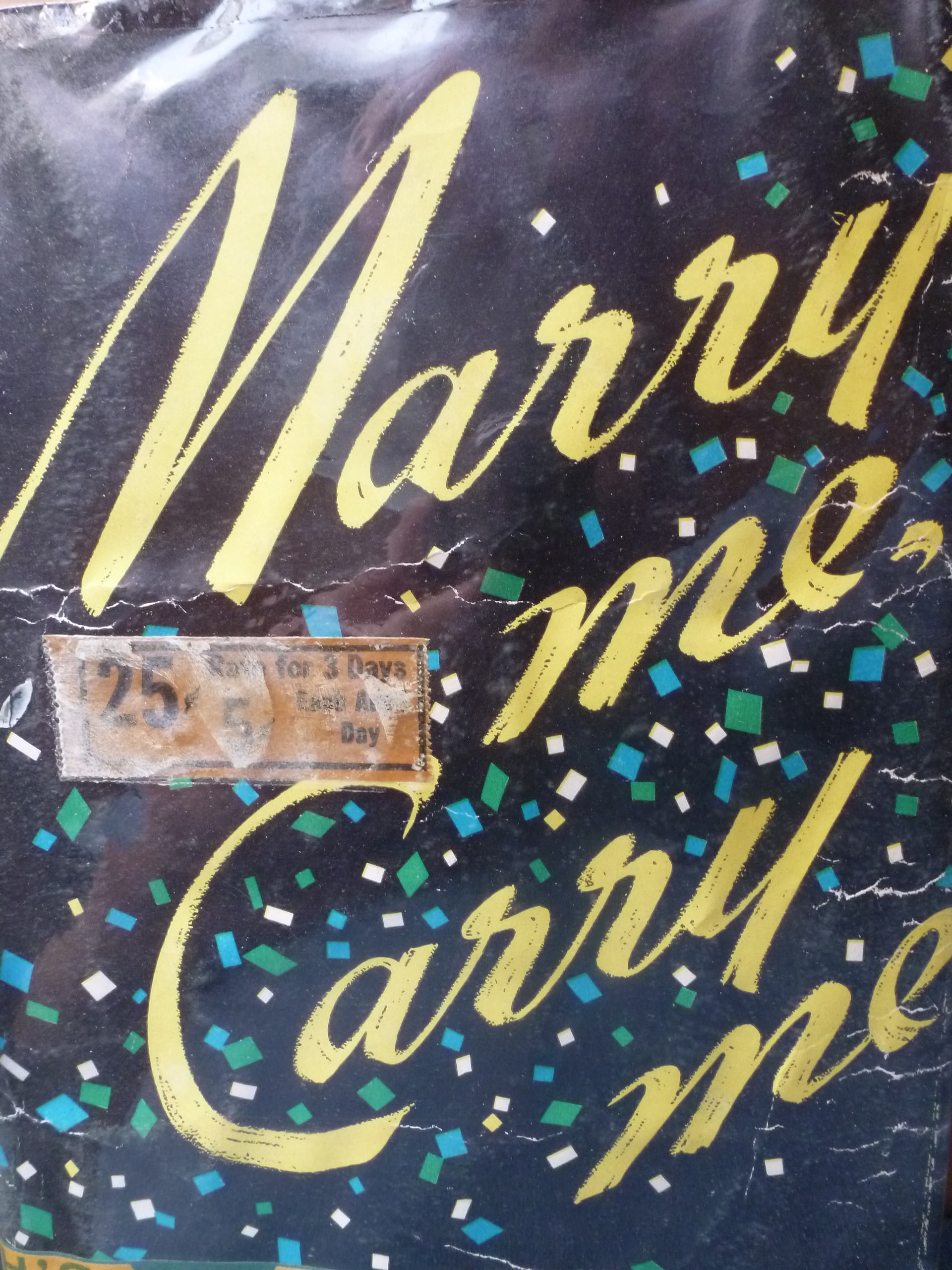
Marry Me, Carry Me
Houghton Mifflin, 1956
The story of newlyweds Alitta and Jack Castle and their friends and neighbors during early mining days in Park City, Utah, and the 1906 San Francisco earthquake. The novel is loosely based on the first years of the marriage of Kennelly's parents.